
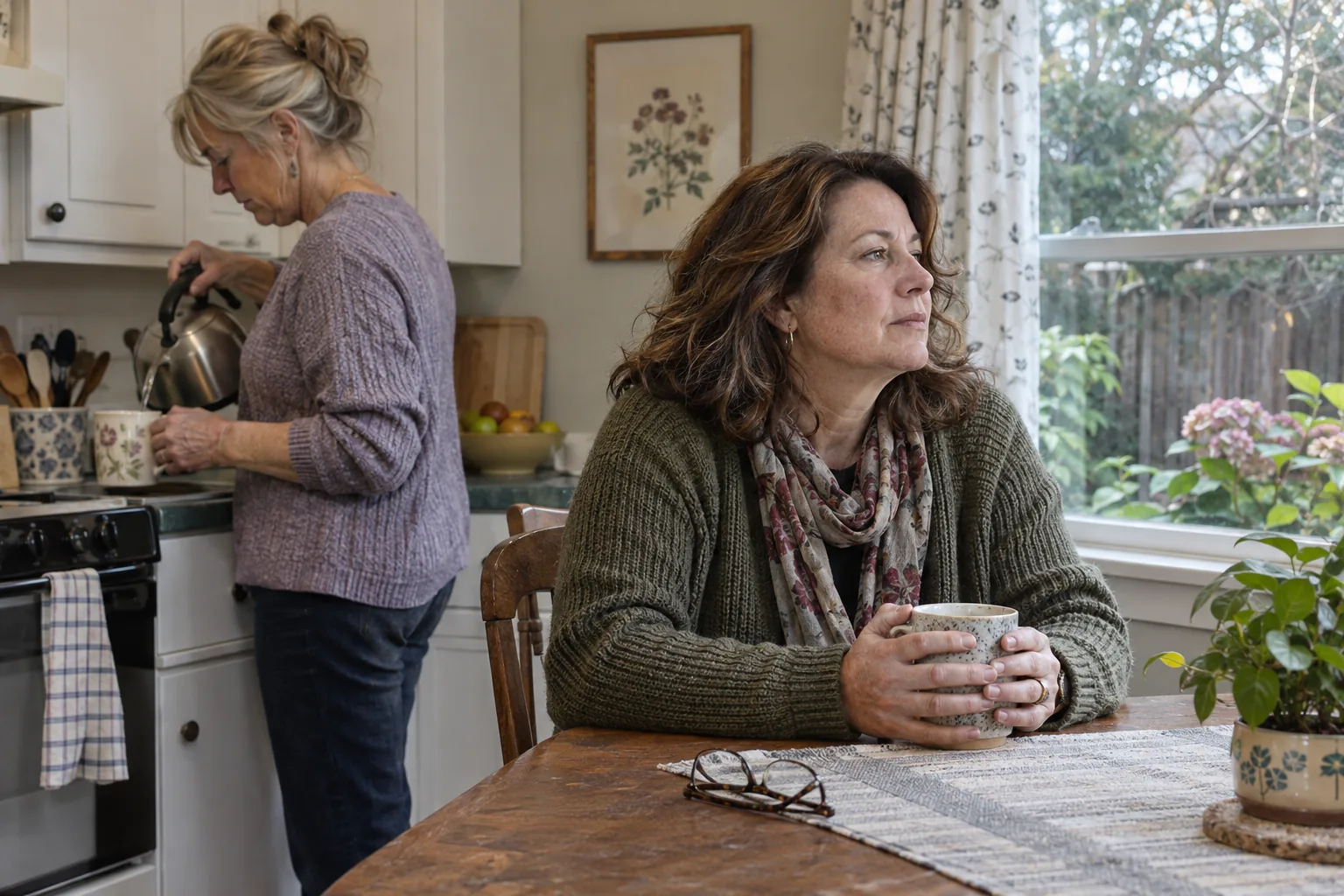
Suppose a friend says, “I heard about your herpes diagnosis,” when you never told them. Or a person you dated has forwarded the message in which you disclosed. Before you have decided what to do, you may already be thinking about your adult children, your workplace, and the next person you wanted to tell yourself.
If someone shared your herpes status without permission, start with what you can establish: what was shared, where it went, and whether there is an immediate safety concern. You can ask for further sharing to stop, report content, and decide who deserves a response. You do not have to confirm your diagnosis publicly to object to the disclosure.
This guide addresses unwanted sharing after it happens. For deciding whom to tell beforehand, use our guide to choosing who needs to know. The scenarios and messages below are editorial examples, not accounts from readers. Reporting options vary by service and location; this is practical guidance, not a legal assessment.
Find the actual audience before answering an imagined one
“Everyone knows” can feel true before you know whether one person heard a rumor or a post is publicly visible. Keep those possibilities separate. You might ask the person who contacted you: “What exactly did you see or hear, and where?” Ask for the location or context without asking them to circulate the material to more people.
Write down what you know firsthand and what someone has reported. Do not assume that an acquaintance's awkwardness proves they received a screenshot. Equally, you do not need a complete account of every recipient before reporting a post you can already see.
| What you know | A useful next action | What it cannot establish |
|---|---|---|
| A friend repeated a private conversation | Ask them to stop, clarify whom they told, and tell those recipients not to pass it on. | A promise cannot verify that every recipient has forgotten or deleted it. |
| A chat or screenshot is circulating | If safe, keep a private record and report the original account or message through the service. | Blocking an account does not retrieve copies already sent. |
| A public post identifies you | Record its location and request review by the host; consider a separate search-removal request if eligible. | Removal from search does not remove the source page. |
| Someone threatens exposure to control you | Prioritize safety and get individual support before confronting them or changing access. | A carefully worded reply cannot guarantee they will stop. |
These are editorial starting points, not a risk score. More than one row may apply. If there is immediate danger, contact local emergency services; collecting evidence can wait.
If a friend says they were “only trying to help”
You can acknowledge their explanation without accepting the choice. The immediate request should concern their behavior, rather than becoming a debate about whether HSV ought to be private.
“I told you in confidence. Please do not discuss my health with anyone else. Tell me whom you already told, and ask them not to share it further. I will decide whether I want to speak to them.”
If they want to apologize to a large group, consider whether that would introduce the information to people who had never heard it. A narrower request may fit better: contact only known recipients, do not repeat the diagnosis, and do not send a fresh screenshot as an explanation.
Ask for a specific change in the friendship
Perhaps you still want company at dinner but no longer want this person involved in dating conversations. Perhaps you need distance. You can say, “For now, I am keeping health and dating details out of our conversations.” You do not have to decide the entire future of the friendship while asking the sharing to stop.
Notice whether the response includes action: stopping, acknowledging the boundary, and answering honestly about recipients. An apology accompanied by more gossip does not solve the practical problem. If you want support elsewhere, ask one trusted person for something concrete, such as sitting with you while you write a report, rather than feeling obliged to explain your whole history.
If a message or profile screenshot has been shared
Keep a useful record only when it is safe
Australia's eSafety Commissioner lists useful incident details in its evidence collection guide: dates, account identifiers, locations or links, and the surrounding pattern. Its reporting jurisdiction is Australian, but those recordkeeping suggestions can help you describe an incident elsewhere. Keep any report reference too, and put your own notes separately from the original material.
The US NNEDV Safety Net Project warns that some services notify people about screenshots, and that documenting abuse can increase danger if discovered. If someone may monitor your device or accounts, get specialist safety advice before collecting material or changing settings. Do not put sensitive evidence into a public web archive; making a new public copy works against the privacy you want.
Report the conduct without publishing your health history again
Use the service's current reporting tools and the category that accurately fits the conduct, such as harassment, threats, or exposure of private information where offered. Describe the message, account, and location. A concise report might say: “This account posted a private health conversation identifying me without my permission. The original message is at [location]. Please review it under your privacy and harassment rules.” Replace the bracketed wording with the actual reference inside the report.
You do not need to include a medical record simply to make a report more persuasive. If a service requests supporting information, check that you are using its official process and understand what it needs. Save the acknowledgement if you want to follow up. A report requests a review; it is not a guarantee of removal or a deadline for the service to act.
Consider reporting before blocking if doing so is safe and you still need access to the material. Safety takes precedence over that sequence. Changing your own profile may reduce what you publish from now on, but it cannot recall someone else's saved image. Our dating-profile disclosure guide explains the earlier choice about public detail; it does not make you responsible for someone else's misuse of it.
If the information appears on a public website or in Google
There are two separate places to act: the website hosting the material and the search engine displaying a link. Ask the host or platform to review the specific page through its official process. You can describe unwanted disclosure without arguing publicly in the comment thread.
Google's private-information removal policy covers certain information, including private medical records, and some doxxing content involving threats or harmful aggregation. An ordinary statement about HSV is not automatically eligible just because it is unwelcome; use the policy's actual criteria. A request needs the relevant page addresses.
Google's decision concerns its search results, not deletion from the host. A removed result may leave the original accessible through direct links or other services. If the source has changed but the result still displays old information, Google's same help page links to the outdated-result refresh process. None of these routes can promise that every copy will disappear.
You can answer people without confirming the details
In a small community, work, family and dating circles may overlap. You might worry about a conversation at a school event, a volunteer shift, or a dinner with adult children. Decide what that particular person needs from you, rather than preparing a statement for everyone.
For a curious acquaintance, a boundary can be enough: “Someone shared personal information without my permission. I am not discussing the details. Please do not pass it on.” For an adult child who wants to defend you online: “I appreciate you wanting to help. Please do not reply to the post or send it to relatives. I will tell you if I need a specific kind of help.”
A person you are dating occupies a different place. If a sexual relationship is relevant, a rumor is not a substitute for your own clear health conversation. You can choose a private setting, explain the relevant facts, and address the breach of confidence separately. Our guide to disclosure formats can help with that choice.
If you decide to respond publicly, consider the smallest statement that achieves your purpose. Reposting the original to condemn it can expose the same information to your own audience. You may prefer a private report, a request to a group moderator, or no public response. Silence does not signal consent to the sharing.
When exposure is being used as a threat
“Meet me or I will tell your family” is a different situation from a friend making an unwanted disclosure. Threats tied to money, sex, contact, or returning to a relationship call for individual safety support. You do not need to arrange a meeting to obtain an explanation or prove that you are unafraid.
If the person has access to your home, shared devices, or accounts, consider those circumstances before confronting them, blocking them, or changing access. A local domestic-abuse or stalking support service can help you consider options. In the US, the Safety Net resource links to support pathways. Contact local emergency services if danger is immediate. Do not wait to assemble a perfect report.
What about HIPAA or legal action?
US HIPAA rules apply to specified healthcare organizations and their business associates, as explained by HHS's overview of who must follow HIPAA. Do not assume a private acquaintance's disclosure is automatically a HIPAA case. A clinic's disclosure raises a different question. Other laws and remedies depend on location and circumstances; a qualified local adviser can assess your situation. This article cannot determine whether a crime occurred.
Choose one next step you can control
You might record a post location, ask a friend to stop repeating the information, submit a report, or make time with a trusted person away from the conversation. Choose the step that fits what actually happened and what feels safe. You do not have to announce your diagnosis, rewrite your dating profile, or decide whether to date again today.
Sharing something privately did not give another person permission to circulate it. You can change whom you trust with future details while continuing to make honest, private decisions about relationships.
Editorial note: Prepared with AI assistance. The linked policy and safety resources were checked on November 3, 2026. Messages and the comparison table are editorial examples. This article has not received legal review and cannot determine legal rights, reporting outcomes, or individual safety.
HSV After 40 provides dating guidance. About this website and our external registration partner.